Friday, 22 May 2009

The Sweetness of Friendship


“In the sweetness of friendship let there be laughter, for in the dew of little things the heart finds its morning and is refreshed.” Kahlil Gilbran


You know what? I have a confession to make and it’s this: sometimes I'm so moved by the generosity and sweet thoughtfulness of my wonderfully inspiring bloggy friends that I get all choked up! It could be because of a post which reaches out to touch the very heart of me, or something someone did to help make a particular life a little less painful. Perhaps it was because of the courage and tenacity of somebody whose own life has been torn asunder by illness or loss, maybe it was a poem or a lyrical piece of prose or it could have been a beautifully rendered work of art. Often it’s because of the many wonderful comments on a post. Sometimes, of course, the teariness is a result of tummy-clutching hilarity. Many of my blog friends are not only heart-warmingly self-deprecating, but can make me rock with laughter at their madcap antics and Wildean sense of humour!


I know that there are some bloggers who are a bit sceptical about awards – but I’m certainly not one of them. If someone out there in the blogosphere has decided that what I write delights and amuses or holds some sort of resonance for them, then I’m enormously proud and honoured to be given the accolade that these awards carry with them. Above all, it is surely an acknowledgement of what I do here on my blog is worthwhile and so each and every award I receive is cherished.

It is in that spirit that I would like to pass on the International Reach Out Award. You see, it was a very special friend’s birthday yesterday.....

Dr Maithri Goonetilleke has reached out across the world to touch the hearts and minds of so many on his blog ‘The Soaring Impulse’. Quite apart from his exceptional talent with words and music, I immediately felt a connection because of his humanitarian work in his capacity as a doctor with the sick and dying in Swaziland, a place I knew well. Of course, most of you have ‘met’ Maithri, and I know that all of you have been deeply moved by his work with the Good Shepherd Hospital and Baylor Clinic in Swaziland.

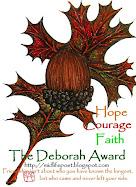
Inspired by the way in which he reaches out with such love and compassion to build the bridges that he speaks of so eloquently, I have created my own special award in his honour on his birthday. It is to acknowledge the depth and breadth of the warm open-heartedness from bloggers all over the world who reach out and touch their readers with their words. The award is also a way of saying thank you for your contributions - in both words and deeds - to the people of Swaziland.

“It has been my experience that whenever one human being reaches out to another in compassion, a bridge is built. A bridge which leads out of despair, into the light of hope and the possibility that tomorrow will hold a few less tears than yesterday” Dr. Maithri Goonetilleke.

In no particular order the International Reach Out Award is for these special people who have all, in their own unique way, done exactly that – they’ve built bridges:

Val, Karen; Beth Kephart; Bee; Lola; Nicky; Mama Shujaa; Zurama; Rosaria; Cuban in London, Anna Lefler, Angela (Geli); Vanessa Brantley-Newton; Lori; Ces; Renee; Bella; Elizabeth Wix; Barb; Erin; Grace; David (authorblog); Cynthia; Amy (Uncensored); Delwyn; Jinsky; Tracy (Hey Harriet); Yoli; Yoborobo; JuneMoonToon; San; Delwyn; Karin; Nancy; Elizabeth (A Moon); Thousand Clapping Hands; Irene (Gossamer); Willow Manor; Deb (Artshtick); Rob; Linda Sue; Rose-Ann; Butternut Squash; Sara Lulu; Holly; Adrienne Trafford; kj (Options); Polly (Sotto Voce); Pyria (Plum Tree); Soulbrush; Studio Lolo; E (Tear Stained); Sallymandy; Reya; Meredith; Anaka; Ribbon; ValGalArt; Pink Dogwood; Karen; Tracy (Pink Purl); Exmoor Jane.

You can click and copy the award and paste it on your sidebar if you’d like to. No obligation, of course!

We’re off to Turkey tomorrow – so I’ll ‘see’ you all when I get back. In the meantime I wish you laughter and love and happy days.

Thursday, 21 May 2009

A Wild Aroma


Ooooh, yummy! I just had to pop in and tell you all that my kitchen is suffused with the most wonderful smell of garlic! Not from a store bought bulb, but fresh and untamed from my garden. I picked a bunch of leaves from the carpet of wild garlic which is growing like a crazy thing in my herb bed a little earlier and left some on my chopping board for a few minutes. The fragrance is all enveloping and I feel quite dizzy – in a nice way – from it!


Wild garlic is a beauteous thing to behold. First come the luscious and drooping leaves then a burst of white flowers indicates the end of the growing season. It is edible at all stages of this growth but, unlike domestic garlic, it’s the leaves, rather than the bulbs, that are prized. The bulbs are delicious, too, but very small and fiddly. The leaves and flowers make a great addition to salads or – as they have traditionally been used for centuries – as a garnish for cheese sandwiches. In fact, some cheeses available here in England are wrapped in the leaves as they mature, giving them a tangy, garlicky edge.


The taste of wild garlic leaves is very similar to the domestic bulb, but not quite as hot on the palate. That said, wild garlic has many (and some say more) of the same health-giving properties. If you have never tried it before, give it a whirl. If you don’t have it in your garden, look for wild garlic shoots at your local farmer’s market, or growing next to the bluebells in a wood.

This is what we’re having for supper tonight – it’s as easy and quick as it’s possible to be so I thought I’d share it with you.


Poached chicken with wild garlic pesto

4 chicken breasts

For the pesto
2 anchovy fillets
2 good sprigs of fresh basil
50g wild garlic leaves
1/4 tsp pepper
50g pine nuts

1 tbsp grated parmesan
100ml olive oil

You can do this with pestle and morter or use a blender, whichever tickles your fancy. Roughly chop the garlic leaves, basil and anchovies and then whizz in a blender - or pound with your pestle - with the parmesan, pine nuts, olive oil and pepper until blended - but not too smooth. Add a dollop more of the olive oil if it’s too thick. Then refrigerate until needed.

Place the chicken in a saucepan, cover with cold water and bring to the boil. Simmer gently, partly covered, for 20 minutes or until cooked through. Drain, remove the skin, thickly slice and drizzle with the wild garlic pesto. Serve with small boiled potatoes or buttered noodles. Heavenly!


Monday, 18 May 2009

The Reading Pod Traveller


Gak! Just when I thought I could fling off all my clothes and leap about in floaty-light African cotton, it’s another gloomy, grey Tupperware Day here on the Mud Bank. Ah well, rather than whinge or whine or shriek or sob or go to bed and waste away and blame Guy for being English and wanting to experience at least a portion of his adult life in his own country, I will fire up my Reading Pod and take off around the world. I thought it would be fun to hop over to Europe first to sample the delights and food of France, Italy, Portugal and Spain. These are all books that could be kept on a bedside table, or next to your comfiest chair and dipped into again and again. Please join me on the Pod if you’d like to – you’d be most welcome.


We’ll let’s start off in Spain, a country as close to my beloved Africa as you can get in Europe. Elizabeth Luard is the best possible person to introduce us to a lively, spicy slice of Spanish omelette in her hootingly funny, deeply poignant and endearingly eccentric memoir,
Family Life:Birth, Death and the Whole Damn Thing Although it starts off in England and ends back in that country with an interlude in France, the Spanish chapters are the warm heart of the book. The prose is dreamy, her line drawings a delight and the recipes increasingly resourceful. There are moments of hilarity, but these are tempered later in the book with Luard’s haunting account of her daughter’s death from AIDS. Certainly a book to treasure and return to time and again.


If you like to travel – and read - in short bursts, it would be hard to beat editor Lucy McCauley’s anthology of travel writing.
Spain : True Stories - Travelers’ Tales gathers its stories and journalism from writers over the last fifteen years. Authors include such luminaries as Gabriel Garcia Márquez, Barbara Kingsolver, Colm Tóibín and Louis de Bernières, whose ‘Seeing Red’ on the tomato-throwing festival of Bunol is hugely entertaining.


Norman Lewis is surely one of the unsung literary heroes of the 20th Century. More than half of his work is fiction but, among his devoted followers, it is travel and memoir that place him in the first rank. My favourite is
Voices Of The Old Sea about three post-war summers he spent in the remote fishing village of Farol, on what is now the Costa Brava. He documents without sentimentality the gradual decline and destruction of traditional ways of life under pressure from the arrival of mass tourism and environmental decay. The way of life of the people and their beliefs is so extraordinary you may find it hard to believe they lived on the same planet we inhabit today.


Where to next? A soupçon of France, perhaps? Then
Hot Sun, Cool Shadow : Savouring the Food, History and Mystery of the Languedoc by Angela Murrills and her husband, the artist Peter Matthews, is your book. It was more than a decade ago that their love affair with the Languedoc region of southern France began. One of Europe's oldest and most historic regions, it is rich with wonders including fairytale castles, wild white horses, Roman ruins, and Carcassonne, Europe's greatest fortified town. What really drew them to this area, however, was the locals' love of food and wine. As their visits to the region became longer, and their dream of owning a home intensify, they begin to discover another way of living - a slow paced existence based on gastronomic pleasure and the really important things in life - hunting for mushrooms, morning trips to the bakery, long lunches, and heated debates about the best way to make cassoulet. They discover ancient houses, take in the scenery that inspired artists like Henry Matisse, retrace the steps of Toulouse-Lautrec, and recreate typical dishes of the region; finally settling themselves in this staunchly independent agricultural region, where life moves slowly under the mellow sun. Fortified by mouth-watering recipes and gorgeous illustrations, Murrills’ gentle prose pays homage to the connection between the history, the food, and the people of the Languedoc.


It has to be Italy next, wouldn’t you agree? Are you an obsessive romantic? Well then, you simply must meet Lisa St Aubin de Teran. She takes us to Villa Orsola, deep in the Umbrian hills in her memorable account of refurbishing a palazzo in ruins in
A Valley In Italy. As the palazzo - with its loggia, noble balustrades, numberless rooms and urgently necessary plumbing - emerges proudly from the ruins, the book's spell begins to have its effect. The signora may be the umpteenth expatriate to describe a grape harvest but she does it beautifully. The fact is that the sheer enthusiasm of this unconventional enterprise finally gets to you. By the time her runaway imagination is converting a few pots of struggling lilies into fields full of fragrantly waving cash crop it is hard to stop yourself thinking this a jolly sensible idea. A Valley In Italy is a book you should read curled up in a comfy armchair with a glass of delicious, full bodied, garnet red Boscarelli Vino Nobile di Montepulciano. You’ll savour both, I promise!


Should we zip over to Portugal now? This land of bay leaves, baccalah and piri piri has stretched out her roots all over the globe. My first taste of Portugal was as a child. Not Portugal proper, but pretty close to the real thing, except with an African flavour. Every year, until things got horrid, we’d go to Mozambique, and in particular Lorenzo Marques (now Maputo), for school holidays. I can still remember the exotic foreignness of that city - the bustling markets, the striking colonial architecture, the tree-lined streets, the gloriously colourful houses and the cafes spilling out on to mosaic pavements. It was there, at one of those outdoor cafes where I had my first encounter with Portugal’s fiery piri-piri sauce. It took the ordinary prawn to volcanic heights and set my taste-buds jangling wildly.


Feeling hungry? Let’s journey to the mother country in Tessa Kiros’
Piri Piri Starfish : Portugal Found. “When she takes her family to live and travel in Portugal, she is captivated by the country and charmed by the old-fashioned way of doing things. Portugal has everything she loves - the markets, the sea, the beautiful old poussadas and, most especially, the food.”

Tessa draws the reader into a kitchen where traditional culinary methods have been handed down generation-to-generation, shared and refined with the help of family and friends who have watched, chopped, stirred and tasted. It’s difficult to put a finger on exactly what makes the understated peasant food of Portugal so beguilingly delicious and distinct from the cuisine of its near neighbours – I guess you just have to experience it.


Rather than risk you all going squiffy-eyed and dizzy over too many books, I’ll leave you with those until the next time I fire up the Pod when maybe we’ll travel even further afield. Until then, I do hope you enjoyed this journey
!

Friday, 15 May 2009

Illustration Friday - Contagious


The great thing about music is that when it hits you, you feel no pain -- but it’s still contagious!


Wednesday, 13 May 2009

Together Moments


This painting makes me think of those special moments we share with our children when they are little and so new to the big wide, thrilling world around them.

Like the time my daughter and I sat on a beach together at the very tip of Africa where the gently temperate Indian Ocean meets the ferocious and frigid Atlantic. We watched as an ungainly pelican pottering drunkenly along the shoreline suddenly opened his wings and took flight. I remember her excited intake of breath as he soared in precise and elegant circles overhead and then like an acrobat, swooped down in a graceful arc to catch his dinner.

Those joyful moments of discovery when paddling through the shallows hand in hand, we spot the luminescent pink interior of a perfect conch shell lying in the sand at our feet. I can recall so clearly her look of surprised delight when she put the giant shell to her tiny ear and listened to the swishing, echoic sibilance of the sea.

Moments when you see that glowing look of triumph when she accomplishes something momentous. It may have been when she finally reaches the topmost branch when climbing a tree, or riding her bike for the very first time without support. Maybe it was when she swam a whole length underwater, or when she shoved fear aside and dived from the highest board.

Those moments when she cups a butterfly in her hand before letting it go in that wide gesture of freedom. Or perhaps that moment when she watched a foal being born – a sweet mixture of slight repugnance and wonderment on her face.

That moment when, together, you laugh so hard at the antics of a mischievous vervet monkey that your tummies hurt. Those moments on the boat, with the wind filling the sails, the water flashing diamonds as it skims the prow and you turn to each other and just smile at the heady exhilaration of it all.

Those moments when she is tucked up in bed, all shiny and clean and sleepy. Pink-cheeked from a day in the sun, she snuggles up close as you sit beside her to read a bedtime story. Halfway through, you look down and see dark eyelashes fluttering as she drifts off happily to dreamland.


Bean Dreams


Monday, 11 May 2009

Attempting Haiku


The harmony ripples
sweet looping quavers connect
to rhythmic kwela.


An offshoot of marabi sound, kwela is the jazzy street music which came to life in the early 50s in South Africa and is still going strong today. The primary instrument of kwela, in the beginning, was the pennywhistle, a cheap and simple instrument which was played by street performers in the townships.

The word ‘kwela’ has its origins in the Zulu word for ‘get up’, but in township slang it also refers to the police vans that patrolled the townships in the apartheid era, the so-called ‘kwela-kwela vans’. It’s said that kwela bands were often used as lookouts to warn gamblers or drinkers of the approaching police.

I don’t think anyone who listens to kwela music can resist shaking a tail feather along with the best of them!


Daniel Mnguni, Siphiwe Dludlu, Smal Ndaba, Charles Dhlomo and Themba Ndaba in Kwela Bafana (Photo: Baxter Theatre)

(**Tracy at Pink Purl and Elizabeth at About New York are co-hosting this wonderful around-the-world Haiku Festival and both have a list of participating bloggers if you’d like to see more of this fascinating poetry style. Thanks so much for the opportunity, Tracy and Elizabeth! It’s been great fun.**)

Friday, 8 May 2009

Vegetable Magnetism - The Food of Love.


Tomatoes are pretty darned sexy, wouldn’t you agree? They’re indisputably curvaceous, definitely rosy, undeniably juicy and incontrovertibly luscious. First, a homage from Pablo Neruda to put you in the mood ~

it's time!
come on!
and, on
the table, at the midpoint
of summer,
the tomato,
star of earth,
recurrent
and fertile
star,
displays
its convolutions,
its canals,
its remarkable amplitude
and abundance,
no pit,
no husk,
no leaves or thorns,
the tomato offers
its gift
of fiery color
and cool completeness.
(Extract from Oda al Tomate)

Putting its sheer magnetism aside for a moment, if the onion is the vegetable that can make you weep, the tomato is most certainly the one that can make you smile. The moment you lay eyes on a basketful of bright, ripe, red tomatoes, you can't help but get happy!


Tomatoes never fail to conjure up memories of childhood holidays at our hideaway paradise next to the sea on the wild western coast of the Cape Peninsular. The fisherman’s wife who brought us the catch of the day each evening would often bring a big basket of her freshly harvested vegetables for us to choose from as well. Late into the summer, her bounty included luscious, tangy smelling tomatoes. My mother would cut up the luscious jewels and mix them with fresh basil, oregano, and thinly-slithered onions, then drizzle them with olive oil. We'd gorge on bowls of tomatoes served with Italian bread while sitting outside at the old wooden table under the shade of a tamarisk tree. It didn’t matter one jot how much of the sweet, oily juices dribbled down your chin.


Here is the quickest and easiest and yummiest recipe for a tomato tart ever! Try it this weekend and they’ll love you ‘til next Friday evening. Guaranteed.

Tarte Nyonsaise

Take 110g/4oz puff pastry
1 beef tomato, cut into slices
Handful of fresh basil leaves
55-85g/2-3 oz Gruyère cheese, grated
Several Niçoise (or Kalmata) olives, pitted
1 teaspoon olive oil
Freshly ground black pepper, to season
1 egg, beaten

Preheat the oven to 220C/425F/Gas 7. Then roll the pastry out thinly on a floured surface. Next, cut a large circle out and place on a non-stick baking tray. Crumple the edges of the pastry roughly using your fingers. Pop the tomato slices in the middle of the pastry circle, fling over the olives, drizzle with oil and then top with the basil. Sprinkle the cheese over and season with black pepper. Finally, brush the edges of the tart using the egg wash and then bake in the oven for 8-10 minutes, or until crisp and golden.


Sheer deliciousity!